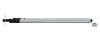
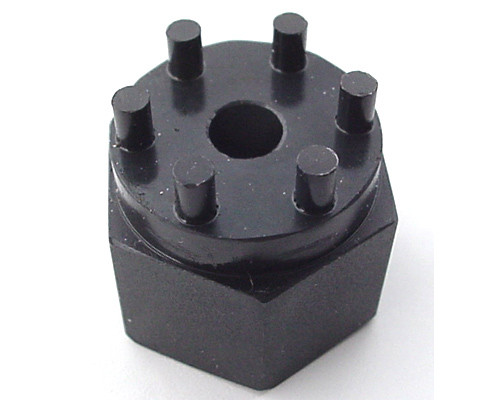
This Endcap TAC DRIVER TOOL is specifically made for the assembly and disassembly of our "Six Point" end cap suppressors, specifically the TAC52, TAC65 and TAC67. We are often asked why we don't just include the driver tools with the suppressor. The answer is that some people choose to never disassemble and clean their suppressor and rather than include them with each suppressor and have to pass along the additional associated cost with each suppressor, each customer has the option.
The six point drive tool is machined from solid 1" hex steel to perfectly fit the complimentary drilled holes in both the front and rear endcaps thus minimizing your chance of damaging the endcap during disassembly. Remember that you'll need TWO TOOLS to make the job easier (please click on the "Instructions" tab for complete disasembly and cleaning instructions). TAC Driver Tools are "must have" accessories for your .22LR TAC suppressor.
Overall Rating: 5 out of 5 1 reviews
All Tactical Innovations .22LR suppressors have threaded endcaps to allow the user to disassemble them for cleaning and service. Many manufacturers will claim to have "self cleaning" suppressors or that swishing a solvent in the suppressor will sufficiently clean your suppressor. We all know how dirty .22's are, and suppressors wind up with a lot of that dirt in them. Ultrasonic cleaners will remove the carbon and dirt but WILL NOT remove the lead build up.
There are two different schools of thought on the suppressor cleaning issue. Most users are willing to clean their suppressor as necessary to ensure its long life with no problems while other users never disassemble their unit and attempt to clean it as much as possible by soaking or ultrasonic, without ever disassembling it. If you choose to not disassemble your suppressor, eventually it will get leaded up to the point that it will no longer be functional and disassembly will be difficult to impossible. While it's true that you can get away without cleaning a suppressor for a long time (possibly 10's of 1000's of rounds), eventually the lead will get so thick that the bullet will literally have to squeeze through the now undersize hole in the baffle. If you're the kind of shooter that we are, and you want to shoot your suppressor A LOT, we want you to be as happy with your suppressor years down the road as you are with it when you get it. The ability to disassemble the suppressor for cleaning or service without the need to return the suppressor to the manufacturer to have it cut open as required by other manufacturers, is a significant advantage of the TAC series of suppressors over other manufacturers' offerings.
Since .22LR ammo is not jacketed (the copper coated washed bullets are not the same as a jacketed bullet), you will experience lead buildup in addition to carbon and dirt. Each time you shoot any .22LR ammo, a mist of lead leaves the barrel and when it reaches the colder suppressor, it will instantly harden on the suppressor surface and continually build up. The frequency of cleaning will depend on the ammunition that you shoot, since some are dirtier than others. We suggest that you clean your suppressor the first time after a couple 100 rounds so you'll understand the process before it gets too hard to take it apart. There is no need to clean it any more often than you have to based on your difficulty to disassemble it. Generally 2500 to 3500 rounds has been the preferred cleaning frequency that customers have reported but many customers wait for 5000+ rounds. More frequent cleaning intervals, such as after each use, are not necessary and serve no benefit to the suppressor.
Cleaning without disassembly can easily be accomplished with either an ultrasonic cleaner or simply soak it by immersion in a parts washer. DO NOT USE any cleaner that has ammonia in it since it will disolve your suppressor and baffles causing permanent damage. DO NOT use gasoline or kerosene, you stand the risk of exploding the suppressor when you next fire it. Drain it completely, wash it out well with water, shake out any excess water, fire a round or 2 to get the remaining water out and then lightly mist spray with non-flamable oil. You'll be able to remove the dirt and carbon using this method but your will not be able to remove the lead.
DISASSEMBLY STEPS:
If you do not have access to an abrasive blast cabinet, you can usually get someone at the local machine shop or car repair to either do them or let you use there cabinet for a very reasonable fee.
As a last resort, you can try to use a brush to clean the baffles to remove any large deposits, ensuring that the ports and vents are not in any way blocked. However, it is almost impossible to get the baffles clean with only a brush.
Also note, that there is NO solvent / cleaner / chemical that will remove the lead and not also damage the aluminum baffles since if it will take the lead off, it will also damage the aluminum baffels. In addition, the resultant solution is highly toxic and is a hazmat which requires stringent disposal requirements. Disposal in the drain or on the ground could get you in big trouble.
To clean the inside of the tube, Sears sells a small 3 stone brake hone that will easily fit a 1" tube. When placed on an electric drill, you should lightly oil the inside of the tube and using the brake hone will remove the lead rings in the tube. As long as you don't over hone the tube, only the lead rings will be removed and the inside of the tube will be nice and smooth and the ID will not change.
GENERAL NOTES:
Email or call if any questions, we're glad to help!
 This product can expose you to chemicals including lead, which are known to the State of California to cause cancer and birth defects or other reproductive harm. For more information go to www.P65Warnings.ca.gov.